18
Feb
Supervising lab and clinical work. Ability to assess educational needs and design and develop responsible curricula.
What are the roles and responsibilities of a nurse educator. However, the purpose, practice, roles, and responsibilities of a clinical nurse educator, also known as a nursing professional development specialist, differ from those of an academic nurse educator. • changes to work processes which may change the roles and responsibilities of other staff members • decisions in regard to complex issues that are not clearly defined in policy Ability to plan, implement, and evaluate individual patient care.
The best nurse educators take time to invest in their students and. Nurse educators inspire, teach, and mentor the next generation of nurses, leading the way to the future of patient care. Primary purpose of the role.
They teach and inform prospective nurses about how they can excel in healthcare situations. What nurse educators do in a hospital setting. This study set out to quantify the role of the cne in a large, rural, and tertiary academic medical center using the measure of time.
Lecturing and guiding class discussions. Teaching nurses is an exciting and challenging career, and the nurse educator role offers a wealth of opportunities. Nurse educators teach and mentor current and future nurses.
A nurse educator is responsible for teaching aspiring professional nurses, designing courses according to the curriculum, and organizing activities to practice and enhance the students� knowledge. Nurse educators serve an important function within the hospital system. A nurse educator is responsible for designing curricula, teaching and guiding students, evaluating the students� progress, writing or reviewing educational material, etc.
Nurse educators are often responsible for designing, developing, delivering and evaluating education. The role of nurse educator is significant as it helps shape the future of both nursing professionals and the field alike. Some work in the clinical setting.
A nurse educator instills the knowledge that students attending your educational program or employed by your institution or company need to work effectively as nurses. However, nurse educators are more than just university professors or seminar speakers — they encompass many health education roles. Providing continued education to practicing nurses to update their skills;
In this context, nurse educators must provide training and. Nurse educators manage clinical activities and observe the students� performance in actual training. Their responsibilities may include designing educational programs and curricula, providing training to aspiring nurses or licensed staff, and evaluating research to continuously improve clinical practice.
Average salary of a nurse. Nurse educator duties and responsibilities. The duties and responsibilities of a nursing educator are as mentioned below:
Clinical nurse educators can move on to administrative roles, in which they can manage nurse education programs and develop continuing education programs for. Nurse educator provides and appropriate climate for learning, and facilitate the adult learning process by developing, planning, and presenting education activities and directly or indirectly fostering the development of competence in the nursing staff. They must have excellent knowledge of the.
Ability to assess educational needs and design and develop responsible curricula. Nurse educator duties & responsibilities to write an effective nurse educator job. Teach courses and provide training to licensed and unlicensed nurses.
Nurse educators take on important roles within an education facility or hospital. But don’t assume all nurse educators work in the academic setting; Nurses in some cities earn a higher salary.
The potential for advancement is significant as well; Supervising lab and clinical work. A diabetes nurse educator is a nurse who specializes in the care and management of patients with diabetes.
In both settings, knowledge of educational theories and principles underpins. Nurse educator is required to evaluate the existing nurse training programs and also work upon preparing new ones for the nursing students. Working knowledge of the use of established care models in the development of education programs.
Learn about educators’ roles in both the clinical and academic setting. However, the salary may vary depending on your speciality, education, work experience and geographical location. Managing and creating exercises for the professional development of practicing nurses;
The median salary for a nurse educator currently sits at $70,185 with top earners being paid up to $93,269, according to payscale. If you want to touch countless lives and improve staff development, then the role of nurse educator may be for you. Designing, implementing, and assessing the educational requirements to train future nurses;
They help prepare future nurses for employment or allow nurses already working in the field to improve their job performance. Clinical nurse educator duties and responsibilities. Some of the most common responsibilities of a nurse educator include:
They may work in classrooms, as well as in clinical settings. Design and continuously improve and adapt curriculum depending on educational needs. They act as mentors and teachers, providing realistic expectations for new nurses.
A nurse educator should be creative to design new curricula. Nurse educators play a vital role in ensuring that the next generation of nurses is prepared to meet the growing demand for healthcare services. While they may go by different job titles, all nurse educators have a passion for education.
The national average salary is ₹2,52,603 per year. The nurse educator provides specialist advice, develops resources and manages projects to helpthe council. Although nurse educator roles vary, depending on specialty and education level, your general responsibilities may include some or all of the following:
The role of the clinical nurse educator (cne), vital to safe patient care and professional development of clinical nurses, is poorly defined in the literature with respect to the how the cne spends his or her time. Nurse educator needs to attend nursing conferences and. Nurse educators are also instrumental in shaping the future of the nursing profession, encouraging a focus on holistic patient care and illness prevention, as well as promoting community health.
Advanced nursing skills in area of specialty. Nurse educator needs to take teaching sessions for the nursing students. Technical leadership skills within area of expertise.
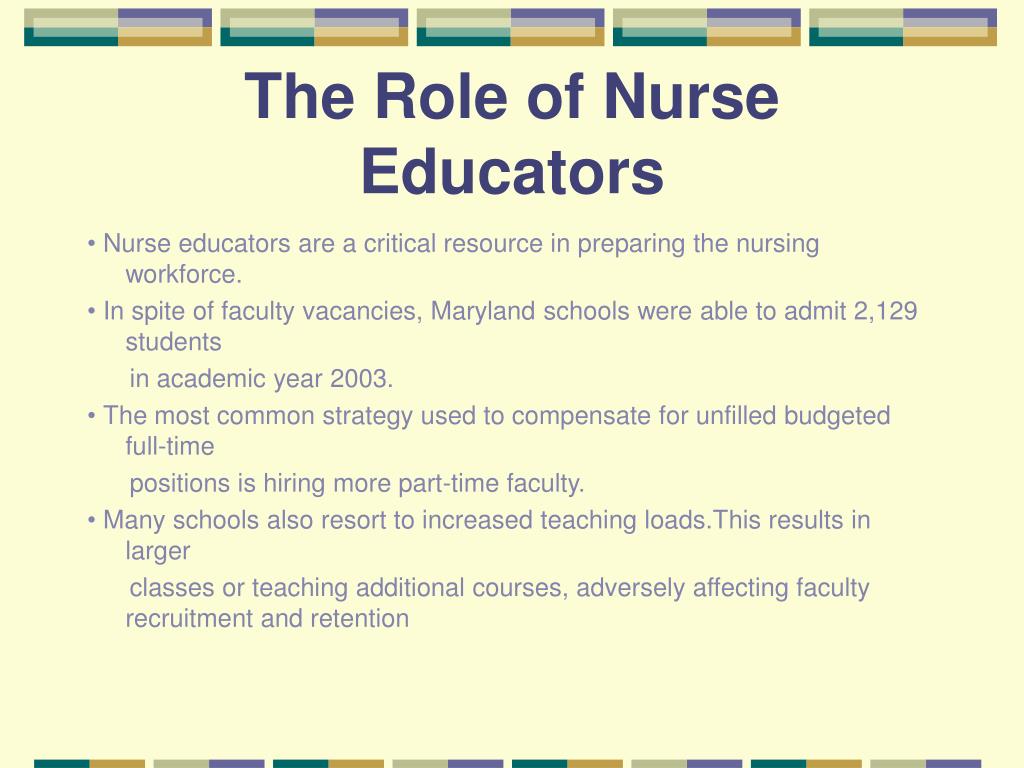
The role of nurse educators.