22
Sep
The product owner works with the development. Scrum master (scrum specific) the scrum master, a role specific to the scrum methodology and sometimes included in the hybrid methodology scrumban, filters requests that come to the agile team, manages the backlog, and facilitates all scrum meetings.

What are the roles in agile. Product owner / business analyst. Strong communication between the team members, high degree of customer involvement, and iterative structure of projects. Make the investments required to keep development speed high.
In agile things are different. In fact, it can be a rotating role held by. Product owners set the vision for the team, build and refine the backlog, and collect input from customers and key stakeholders.
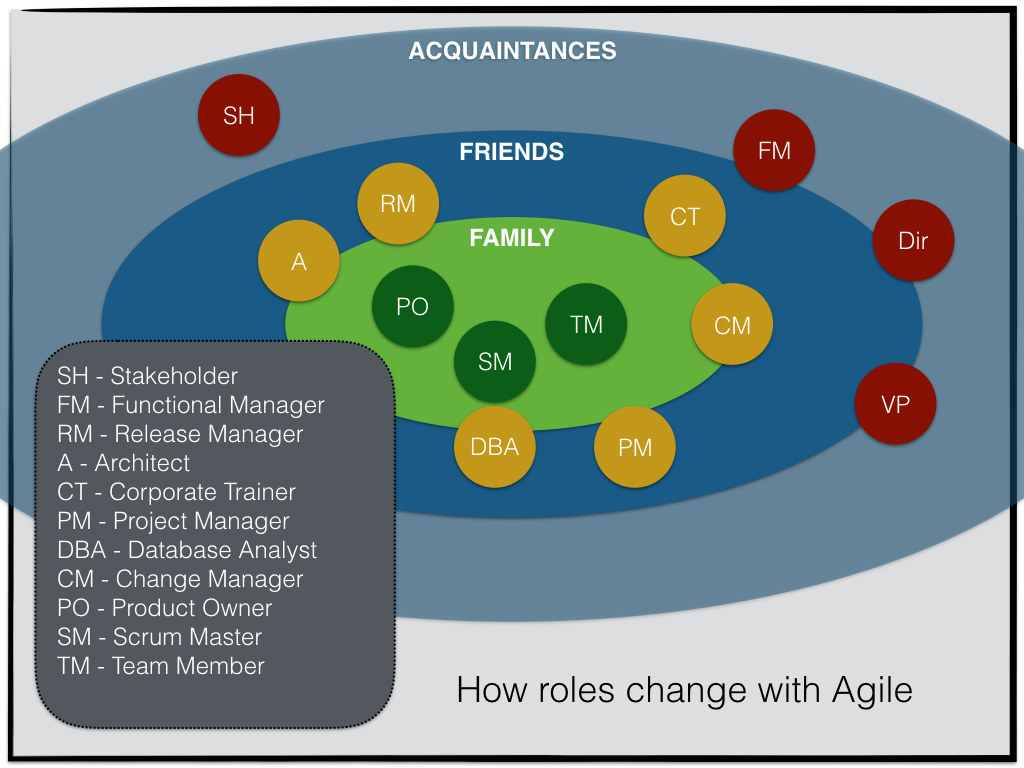
Team work is much emphasized over individual heroics. This means that any job title, even your existing ones, can perform one of the roles. This role is not necessarily a leadership role.
They are the project champion in the business, own the business case for the project. The transformation monitoring team is purposefully. Again there are a few concrete things that make this description more useful to an agile organization.
Jobs and role descriptions provide ideas for ways people can collaborate and interact with each other. The responsibilities of a process coach include: The agile roles that are different from the traditional equivalent;
Define and explain product backlog items (pbi) clearly. The amount of roles you can find in an agile team depends on the framework, the project’s scale, and the size of the team. Train scrum masters, kanban leads, and product owners.
Stakeholders or people with the power to impact the project without being part directly. The traditional roles which are unfortunately often left out of agile projects; The product owner has the following responsibilities during the sprint:
Teaching and mentoring agile teams. The business sponsor is the most senior person involved with the project. They do the planning and maintain the improvement backlog.
Business sponsor owns the cheque book. While individual tasks are assigned to individuals, who. The three scrum roles describe the key responsibilities for those on the scrum team.
Much of the actual work may be delegated, but the guidance team will oversee and manage the work. Agile project teams are made up of many people and include the following five roles: Train teams to adopt the agile working practices.
Enable product backlog transparency within and outside the development team. An agile team working in scrum has three roles: The role of the product owner during an agile sprint.
It means that their members have to communicate constantly to. Development team members are multidisciplinary experts with the skills required to achieve the team’s. Agile team member / developers or specialist.
This aids in enabling people to change and rethink how they implement projects. The person responsible for bridging the gap between the customer, business stakeholders, and the development team. All roles at the project level need to adopt the facilitative, empowering leadership style which allows agile teams to learn as they go and reflect, adapt and enhance process.
9 rows agile team roles. An agile mentor plays the role of a coach in helping team members implement what they learned during their training. According to these values and principles we can depict implicit agile roles and responsibilities in scrum.
Makes the transition smooth by teaching them to develop the agile mindset. The main role of an agile mentor is to help an individual or teams to improve and adopt agile practices and approaches. However, this part of the role also covers instances where an organization might reach a plateau in their agile implementation.
Scrum master (scrum specific) the scrum master, a role specific to the scrum methodology and sometimes included in the hybrid methodology scrumban, filters requests that come to the agile team, manages the backlog, and facilitates all scrum meetings. Apmos vary in size and range from a single agile program management office member, to an entire department of people with different roles and responsibilities. Usually, there are three different roles in a team:
An agile champion needs to be easily accessible to answer these questions and help train team members on how to use agile to troubleshoot and solve problems on their own in the future. The methodology is based on three main principles: The product owner works with the development.
Jobs are containers for many fined grained roles that a person has the option to play. The product owner is an expert on the product and the customer�s needs and priorities. Scrum masters teach team members how to operate in an agile fashion, remove barriers and accelerate progress.
The team leader or scrum master. A transformation guidance team is responsible for guiding/leading the execution of your transformation.
Previous post
What are the roles in agile teamNext post
What are the roles in a project team